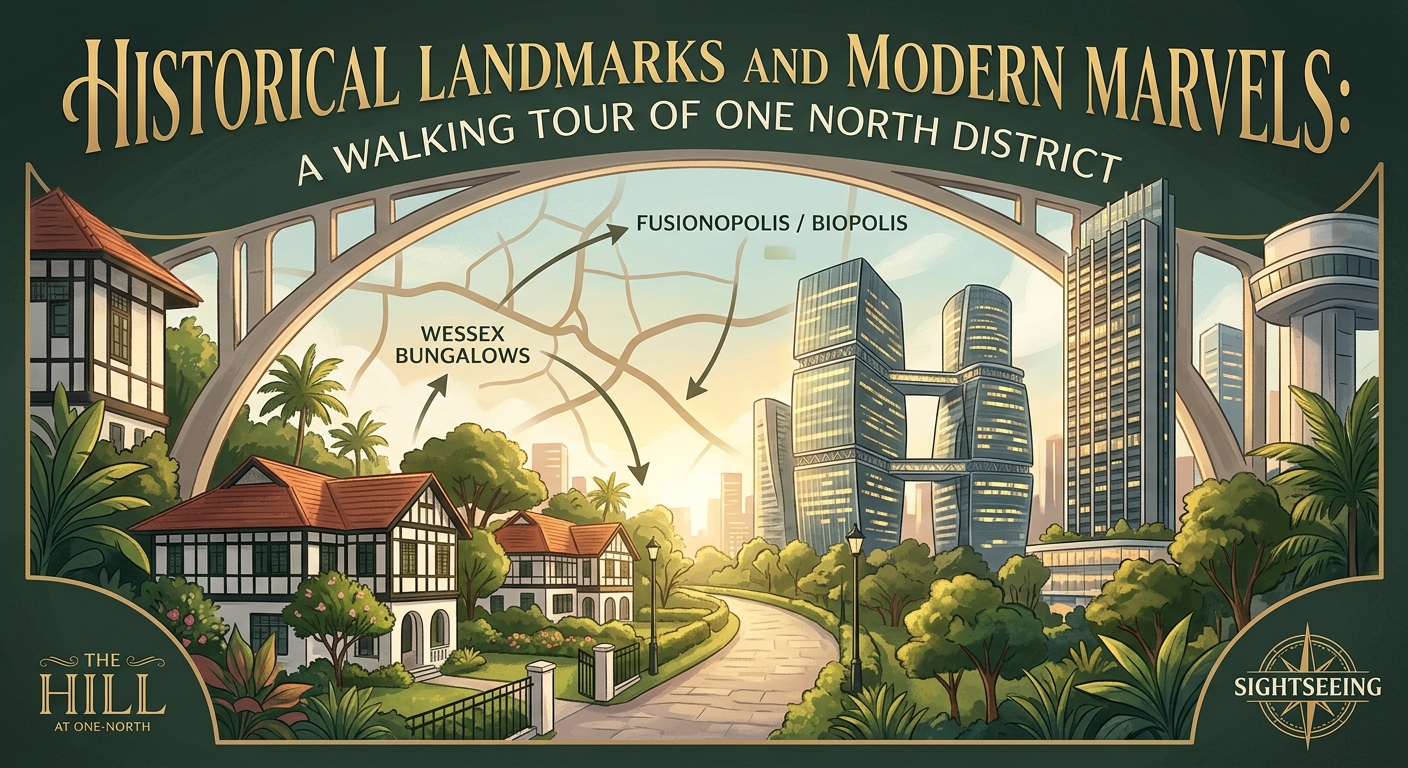
Historical Landmarks and Modern Marvels: A Walking Tour of One North District
Singapore’s one-north district sits at a fascinating crossroads. Here, colonial-era landmarks stand shoulder to shoulder with futuristic research facilities. Converted warehouses buzz with startups while century-old buildings tell stories of the area’s industrial past. This neighbourhood rewards those who take the time to walk its streets, camera in hand, eyes open.
This one north walking tour singapore guide takes you through a 4.5-kilometre route covering Fusionopolis, Biopolis, Rochester Park, and the Star Vista area. You’ll see cutting-edge research centres, preserved colonial buildings, public art installations, and green spaces. The entire walk takes three to four hours at a comfortable pace, with plenty of cafes and rest stops along the way. Bring water, sunscreen, and comfortable shoes.
Getting to Your Starting Point
The tour begins at Buona Vista MRT station, accessible via the Circle Line and East West Line. Exit B leads directly to the one-north gateway.
Arrive early morning, around 8am, to beat the heat. The district comes alive during weekday mornings when researchers and tech workers fill the cafes. Weekends offer quieter streets but some buildings restrict public access.
Park your car at Star Vista or Rochester Commons if you’re driving. Both offer reasonable hourly rates and connect directly to the walking route.
Your Complete Route Map
This table breaks down each segment of your walk with estimated times and key highlights.
| Segment | Distance | Time | Must-See Spots |
|---|---|---|---|
| Buona Vista MRT to Fusionopolis | 400m | 10 min | Sky bridges, vertical gardens |
| Fusionopolis to Biopolis | 800m | 20 min | Research labs, reflection pools |
| Biopolis to Rochester Park | 1.2km | 25 min | Colonial bungalows, heritage trees |
| Rochester Park loop | 900m | 30 min | Restored black and whites, cafes |
| Return via Star Vista | 1.2km | 25 min | Shopping mall, food options |
The entire circuit measures approximately 4.5 kilometres. Factor in photo stops, cafe breaks, and building admiration time.
Stop One: Fusionopolis Towers
Step out of Buona Vista station and you’ll immediately see two striking towers connected by sky bridges. Fusionopolis houses media, infocomm, and physical sciences research facilities.
The ground floor public areas welcome visitors. Check out the interactive displays showing current research projects. The vertical gardens climbing the building facades make for excellent photos.
Walk through the connecting bridges if security permits. The views stretch across the entire district from these elevated walkways.
“The architecture here tells you everything about Singapore’s vision. We took industrial land and transformed it into a knowledge economy hub without erasing the past completely.” – Urban planner interviewed during site visit
The reflection pools between the towers mirror the buildings beautifully on clear days. Morning light works best for photography here.
Stop Two: Biopolis Complex
A ten-minute walk south brings you to Biopolis, Singapore’s biomedical research hub. Seven buildings, each named after a famous scientist, form this interconnected campus.
Public areas include:
- Ground floor exhibition spaces showing biomedical breakthroughs
- Outdoor amphitheatre hosting occasional public lectures
- Landscaped gardens with native plant species
- Cafeterias open to visitors during lunch hours
The buildings themselves deserve attention. Bright colours distinguish each tower. Nanos (green), Helios (orange), and Matrix (red) create a vibrant skyline against tropical blue skies.
Security restricts access to research floors, but ground levels remain open. The information desk staff can share details about current projects if you’re curious.
Stop Three: Rochester Park Heritage District
Cross Rochester Road carefully. The character of your walk changes dramatically here.
Rochester Park preserves fifteen colonial-era black and white bungalows. Built in the 1900s for British military personnel, these structures now house restaurants and lifestyle businesses.
The contrast hits you immediately. Towering research facilities give way to low-slung buildings with wide verandahs and pitched roofs. Mature rain trees provide dense shade.
Take your time wandering the circular road. Each bungalow carries a unique story. Information plaques outside selected buildings explain their history.
Photography tips for this section:
- Shoot the bungalows from slight angles to capture their depth
- Include the surrounding greenery in your frames
- Early morning or late afternoon light prevents harsh shadows
- Look for architectural details like ventilation blocks and timber shutters
The restaurants here serve everything from Italian to Japanese cuisine. Most occupy restored interiors that maintain original features like terrazzo floors and timber beams.
Stop Four: Public Art Installations
One-north district functions as an outdoor gallery. Sculptures and installations dot the landscape between buildings.
Notable pieces include the kinetic sculpture near Fusionopolis that moves with wind currents. At Biopolis, look for the DNA helix installation near the main entrance.
Many pieces remain unlabeled. Part of the fun involves interpreting the art yourself. Some clearly reference scientific themes while others offer pure aesthetic pleasure.
The district management occasionally rotates installations. What you see today might change next year, giving repeat visitors fresh experiences.
Stop Five: Star Vista Shopping Centre
Your final stop offers air-conditioned relief and refreshment options. Star Vista connects directly to the walking route via covered walkways.
This isn’t your typical shopping mall. Designed to serve the surrounding research community, it balances retail with community spaces. The rooftop garden provides panoramic views of the entire district you just walked.
Food options range from food court basics to sit-down restaurants. The basement supermarket stocks drinks and snacks if you need supplies.
The cinema on upper floors occasionally screens documentaries about science and technology. Check their schedule if you’re interested.
Best Times to Visit Different Spots
Timing matters when planning your one north walking tour singapore experience. Different locations shine at different hours.
Morning (8am to 10am)
– Fusionopolis sky bridges catch golden light
– Biopolis gardens look fresh after overnight watering
– Rochester Park remains relatively empty
– Cafes just opening, perfect for breakfast stops
Midday (11am to 2pm)
– Research facilities buzz with lunch crowds
– Public exhibitions fully staffed and accessible
– Harsh light makes photography challenging
– Heat peaks, bring extra water
Late Afternoon (3pm to 6pm)
– Softer light returns for better photos
– Rochester Park bungalows glow in warm tones
– Workers leaving buildings add human interest
– Cafes fill with after-work crowds
Avoid visiting during heavy rain. The district offers limited covered walkways between major stops. Check weather forecasts before setting out.
What to Bring on Your Walk
Pack light but prepare properly. This checklist covers essentials:
- Water bottle (at least 1 litre per person)
- Sunscreen and hat for sun protection
- Comfortable walking shoes with good support
- Camera or smartphone with charged battery
- Portable charger if you photograph extensively
- Small umbrella for sudden showers
- Notebook for jotting observations
- Cash for small purchases at independent cafes
Dress in light, breathable fabrics. Singapore’s humidity makes layering unnecessary. Most indoor spaces blast air conditioning, so a light cardigan helps if you’re sensitive to cold.
Common Mistakes to Avoid
| Mistake | Why It Matters | Better Approach |
|---|---|---|
| Starting after 10am | Heat becomes oppressive | Begin at 8am or earlier |
| Wearing new shoes | Blisters ruin the experience | Break in footwear beforehand |
| Skipping water breaks | Dehydration hits fast in tropics | Drink before feeling thirsty |
| Rushing through Rochester Park | You’ll miss architectural details | Allocate 45 minutes minimum |
| Ignoring building access hours | Some areas close weekends | Check schedules in advance |
Many first-time visitors underestimate distances. The district spreads wider than it appears on maps. Those 4.5 kilometres feel longer in tropical heat.
Extending Your Tour
Keen walkers can add these nearby attractions:
The Wessex Estate, just north of Rochester Park, contains more colonial bungalows. Most remain private residences but the streetscape itself rewards exploration.
Holland Village sits 1.5 kilometres west. This bohemian neighbourhood offers vintage shops, international restaurants, and a completely different vibe from the tech-focused one-north area.
The Southern Ridges trail connects from HortPark, about 2 kilometres south. This elevated walkway links several parks and nature reserves.
Consider splitting your visit across two days if you want to see everything thoroughly. Day one covers the modern architecture and research facilities. Day two focuses on heritage buildings and extended nature walks.
Food and Refreshment Stops
Strategic breaks make the walk more enjoyable. These spots offer the best combinations of location, quality, and atmosphere.
Along the Route:
– Timbre+ at one-north features outdoor seating and local food stalls
– Rochester Park restaurants provide upscale dining in heritage settings
– Star Vista food court delivers affordable variety
– Fusionopolis ground floor cafes serve decent coffee
Most cafes open by 8am. Rochester Park restaurants typically start service at 11am for lunch. Book ahead for weekend dining at the heritage bungalows, as they fill rapidly.
Hawker centres don’t exist within the immediate district. The nearest traditional hawker food requires a short bus ride to Holland Drive or Ghim Moh.
Photography Opportunities You Shouldn’t Miss
Certain spots deliver exceptional images regardless of your camera skill level.
The Fusionopolis sky bridges create dramatic leading lines. Stand at ground level and shoot upward to capture their geometric patterns against the sky.
Rochester Park’s tree-lined roads photograph beautifully. Position yourself at the curve in the road for compositions that lead the eye through the frame.
Biopolis reflection pools work best on windless days. Arrive early before breezes disturb the water surface.
The contrast between old and new makes for compelling storytelling. Frame shots that include both colonial architecture and modern towers in the same image.
Golden hour (the hour after sunrise or before sunset) transforms ordinary scenes. The warm light enhances both natural and built elements.
Making the Most of Weekday Visits
The district operates primarily as a working research hub. Weekday visits offer unique advantages.
You’ll see the area functioning as intended. Researchers grab coffee between experiments. Startup teams brainstorm in outdoor spaces. The energy differs completely from weekend quiet.
Some building lobbies host lunch-time exhibitions or talks. Check notice boards near main entrances for schedules.
Cafes and food outlets offer full menus and service. Weekend operations sometimes run on reduced hours or limited offerings.
Traffic increases during morning and evening peaks. Cross roads carefully near office buildings between 8am to 9am and 5pm to 7pm.
Understanding One-North’s Transformation
This district didn’t always look like this. Understanding its evolution adds depth to your walk.
The area once housed industrial facilities and military installations. Redevelopment began in the early 2000s as Singapore pivoted toward a knowledge-based economy.
Planners deliberately preserved selected heritage buildings while constructing modern facilities. The result creates dialogue between eras rather than erasing history.
The name “one-north” references Singapore’s location one degree north of the equator. It also suggests unity, bringing together different scientific disciplines in one location.
Today, over 40,000 people work in the district. Companies range from global pharmaceutical giants to three-person tech startups.
Accessibility Considerations
The route accommodates various mobility levels with some planning.
Footpaths throughout the district meet accessibility standards. Curb cuts exist at most crossings. The terrain remains relatively flat with minimal elevation changes.
Wheelchair users can complete most of the route. Rochester Park’s gravel paths present the main challenge. Stick to paved roads in that section.
Covered walkways connect some but not all segments. Sun exposure becomes unavoidable during certain portions. Plan rest stops accordingly.
Benches appear regularly along the route. Fusionopolis and Biopolis provide air-conditioned lobbies for extended breaks.
Public toilets exist at Star Vista, Fusionopolis, and Biopolis. Rochester Park restaurants allow patron access to facilities.
Why This Walk Rewards Repeat Visits
One circuit won’t capture everything. The district reveals different facets depending on when and how you visit.
Seasonal changes affect the landscape. Certain trees bloom spectacularly during specific months. Rain transforms the modern architecture, creating mirror-like surfaces and dramatic cloud backdrops.
The research facilities host occasional open houses. These events allow public access to normally restricted areas. Check district websites for annual schedules.
Art installations rotate periodically. Return visits guarantee encountering new pieces.
Your own interests determine what catches attention. Architecture enthusiasts notice different details than photography buffs or history lovers.
Your One-North Adventure Awaits
This one north walking tour singapore route offers something rare in the city state. You’ll witness Singapore’s past, present, and future occupying the same few square kilometres.
The walk doesn’t demand special skills or extreme fitness. Just curiosity, comfortable shoes, and a few hours. Start early, stay hydrated, and let the district unfold at walking pace. You’ll return home with photos, stories, and a deeper appreciation for how Singapore balances preservation with progress.