How One North Transformed from Industrial Estate to Lifestyle Hub
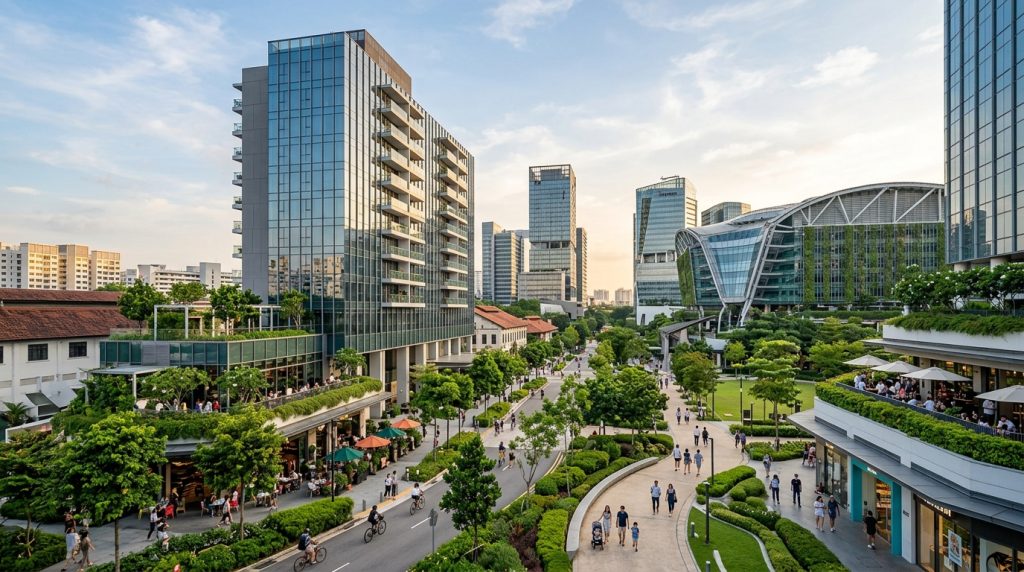
The factory sheds and warehouses that once dominated the Buona Vista area are almost unrecognizable today. What started as an industrial estate in the early 2000s has become one of Singapore’s most dynamic mixed-use districts, blending research facilities, creative studios, residential towers, and lifestyle amenities into a single integrated precinct.
The one north transformation singapore journey began in 2001 as a government-led initiative to create a biomedical and technology hub. Over two decades, the 200-hectare site evolved from industrial plots into a vibrant ecosystem housing global research labs, startups, creative agencies, residential developments, and entertainment venues. Today, it represents Singapore’s blueprint for mixed-use urban regeneration.
The Industrial Origins of One-North
Before the masterplan took shape, the land that became one-north served primarily industrial functions. The Buona Vista area housed light manufacturing facilities, storage warehouses, and logistics operations typical of Singapore’s early economic development phase.
By the late 1990s, Singapore’s economic planners recognized the need to shift from manufacturing to knowledge-based industries. The government identified a large tract of underutilized industrial land near the National University of Singapore and existing research institutions as the ideal location for this transformation.
The Strategic Economic Plan released in 1998 called for the creation of a dedicated science and technology hub. This vision materialized in 2001 when JTC Corporation officially launched the one-north masterplan, covering approximately 200 hectares across the Buona Vista, Dover, and Portsdown areas.
The name “one-north” itself reflects Singapore’s geographical position one degree north of the equator, but also signals the ambition to become a leading innovation cluster in the region.
The Three-Phase Development Strategy
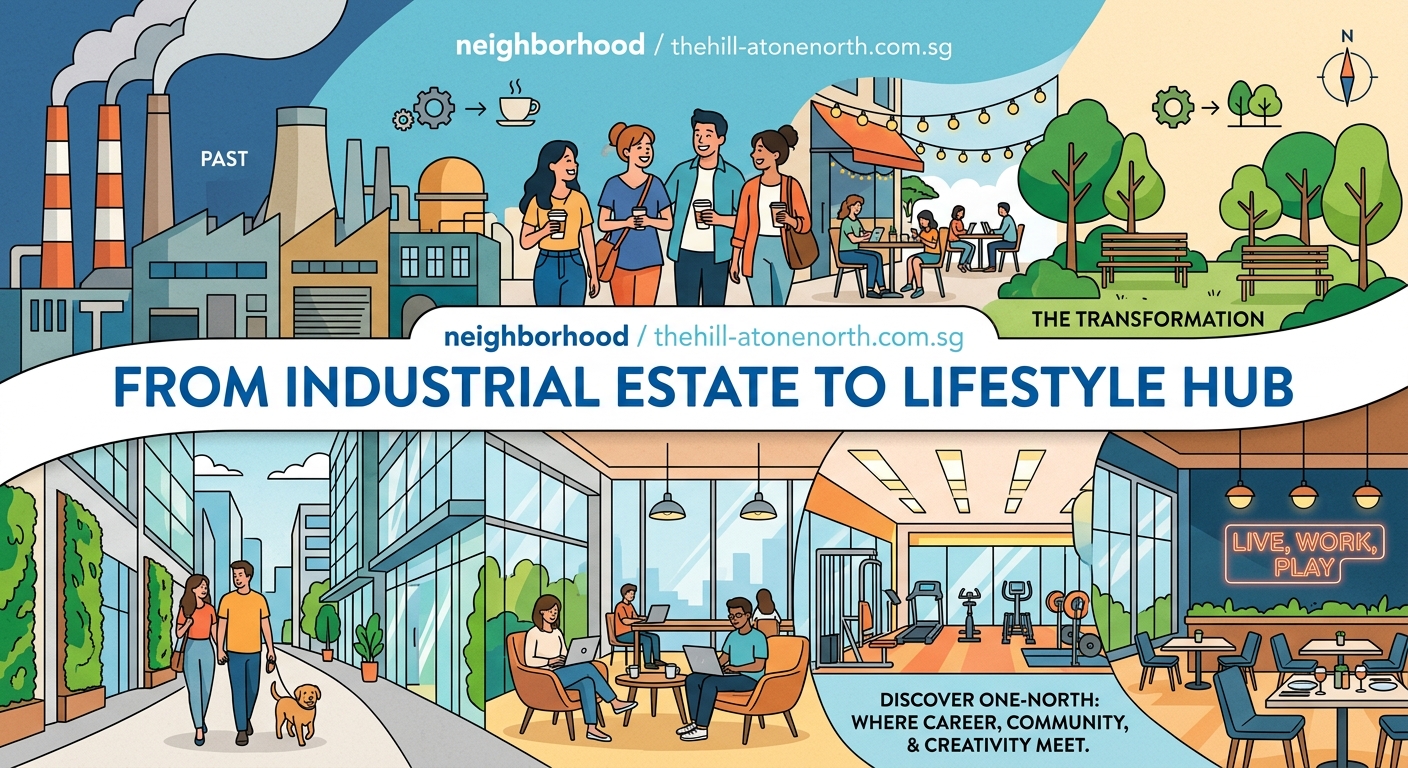
The transformation didn’t happen overnight. JTC structured the development across three distinct phases, each building on the previous stage’s momentum.
Phase One: Biopolis (2003-2007)
The first major development focused on biomedical sciences. Biopolis opened in 2003 as a dedicated research and development complex spanning seven buildings.
The design departed dramatically from typical industrial architecture. Vibrant colors, interconnected walkways, and communal spaces encouraged collaboration between public research institutes and private pharmaceutical companies.
Major tenants included the Agency for Science, Technology and Research (A*STAR), along with multinational corporations like GlaxoSmithKline and Novartis. The concentration of talent and facilities created immediate synergies that validated the masterplan concept.
Phase Two: Fusionopolis (2008-2012)
Building on Biopolis’s success, the second phase targeted infocomm technology and media industries. Fusionopolis opened in 2008, adding two towers that housed research labs, creative studios, and tech startups.
This phase introduced more mixed-use elements. Ground-floor retail, cafes, and exhibition spaces made the precinct more accessible to the public. The architecture emphasized transparency and visual connectivity, with glass facades and open terraces.
The National University of Singapore also expanded its presence, establishing research centers and postgraduate facilities within one-north. This deepened the connection between academia and industry.
Phase Three: Residential and Lifestyle Integration (2013-Present)
The third phase marked the most significant shift in character. Recognizing that a truly vibrant district needed residents, not just workers, JTC introduced residential sites into the masterplan.
The first residential development, The Rochester, launched in 2013. This was followed by several other condominiums that brought thousands of residents into the precinct.
Entertainment and lifestyle amenities expanded rapidly during this period. The Star Vista shopping mall opened in 2011, providing retail and cinema facilities. Rochester Mall followed in 2014, adding supermarkets, restaurants, and lifestyle services.
Portsdown Road transformed from a quiet industrial street into a dining destination, with cafes, bars, and restaurants occupying converted industrial units and new developments.
Key Infrastructure Upgrades That Enabled Change
Physical transformation required substantial infrastructure investment beyond the buildings themselves.
Transportation Connectivity
The Circle Line MRT, which opened in stages between 2009 and 2011, proved critical. One-north and Buona Vista stations provided direct access to the central business district and residential areas across Singapore.
JTC also redesigned the internal road network, creating tree-lined boulevards and pedestrian-friendly streets. The grid layout replaced the previous industrial access roads, improving circulation and creating a more urban character.
Utilities and Smart Systems
Underground utility corridors consolidated power, water, and telecommunications infrastructure. This allowed for easier maintenance and future upgrades without disruptive road works.
The precinct became a testbed for smart city technologies. Sensors monitor air quality, energy consumption, and pedestrian flows. Building management systems optimize cooling and lighting based on occupancy patterns.
Green Spaces and Public Realm
The masterplan allocated 20% of land area to parks and green corridors. Linear parks connect different zones, providing jogging paths and outdoor gathering spaces.
Rochester Park, a heritage site featuring restored colonial bungalows, was integrated into the precinct. The conservation project transformed the bungalows into restaurants and event venues, adding historical texture to the modern development.
The Economic Impact and Tenant Mix
The transformation attracted a diverse range of organizations that created a unique economic ecosystem.
| Sector | Notable Tenants | Economic Contribution |
|---|---|---|
| Biomedical Research | A*STAR institutes, Novartis, GSK | High-value R&D jobs, patent generation |
| Technology | Google, LinkedIn, Razer | Software development, digital innovation |
| Creative Industries | Lucasfilm, Ubisoft, MediaCorp | Content creation, gaming, media production |
| Startups | BLOCK71, LaunchPad | Entrepreneurship, venture capital activity |
| Education | NUS, INSEAD | Talent pipeline, executive education |
The concentration of these sectors in close proximity created spillover effects. Biotech researchers collaborate with data scientists. Game developers work with film studios. Startups access mentorship from established corporations.
Employment in one-north grew from virtually zero in 2001 to over 40,000 workers by 2020. The mix includes PhD researchers, software engineers, designers, and service staff supporting the ecosystem.
The Residential Community Takes Shape
The introduction of housing fundamentally changed one-north’s character and rhythm.
Residential developments brought approximately 5,000 housing units to the precinct by 2023. These aren’t typical suburban condominiums. The projects cater to young professionals, researchers, and creative workers who value proximity to workplaces and urban amenities.
The demographic skews younger and more international than typical Singaporean neighborhoods. Many residents work within one-north itself, creating a live-work-play environment that reduces commute times.
Family-friendly facilities gradually appeared to serve this growing community. Childcare centers, enrichment classes, and small parks accommodate residents with young children. However, the precinct still lacks the full range of schools and family services found in mature estates.
The rental market is particularly active, with many units leased to expatriate researchers and tech workers on employment passes. This creates a transient quality but also brings global perspectives and connections.
Lifestyle and Cultural Evolution
The one north transformation singapore story isn’t just about economics and real estate. The social and cultural changes are equally significant.
Dining and Nightlife
The food scene evolved dramatically. Early options were limited to canteen-style cafeterias and basic coffee shops. Today, one-north offers diverse dining spanning casual cafes to upscale restaurants.
Portsdown Road became the unofficial food street, with establishments like Timbre+ (a live music venue with multiple food stalls), craft beer bars, and international cuisine. Weekend evenings see crowds that would be unthinkable in the old industrial days.
Arts and Events
Public art installations dot the precinct, commissioned through JTC’s art program. Sculptures, murals, and interactive installations add visual interest and conversation starters.
The Fusionopolis atrium hosts rotating exhibitions, product launches, and networking events. These gatherings blur the lines between work and social life, fostering the creative community atmosphere the planners envisioned.
Seasonal events like outdoor movie screenings, food festivals, and sports competitions activate the public spaces and build community bonds among residents and workers.
Fitness and Recreation
The park connectors attract joggers, cyclists, and dog walkers throughout the day. Fitness corners with outdoor equipment serve lunchtime workout crowds.
Commercial gyms, yoga studios, and sports facilities opened to serve the health-conscious demographic. The Star Vista includes a cinema and bowling alley that draw visitors from beyond one-north.
Challenges and Ongoing Adjustments
The transformation hasn’t been without friction and learning curves.
Traffic Congestion
Success brought growing pains. Peak hour traffic along North Buona Vista Road and Ayer Rajah Expressway worsened as employment and residential density increased. The existing road network struggles to handle the volume, particularly during morning and evening rushes.
Parking remains contentious. Office buildings and malls compete for limited spaces. Residential developments sometimes have insufficient visitor parking, causing spillover into surrounding streets.
Retail Viability
Not all retail concepts succeeded. Some ground-floor shops in office buildings struggle with low foot traffic outside business hours. The retail mix continues to adjust as landlords learn what works in this unique environment.
Malls face competition from nearby suburban shopping centers and online retail. Maintaining tenant variety and managing vacancies requires active leasing strategies.
Community Integration
The rapid transformation created some disconnect with surrounding established neighborhoods. Long-time residents of nearby HDB estates sometimes feel the new developments cater to a different demographic and price point.
Efforts to bridge this gap include community events, shared facilities, and transportation links. However, the economic and social differences remain visible.
Environmental Concerns
Increased density raised questions about environmental sustainability. Heat island effects, storm water management, and energy consumption all require ongoing monitoring and mitigation.
JTC has responded with green building requirements, solar panel installations, and enhanced landscaping. The precinct aims for carbon neutrality by 2045, requiring significant additional investment in sustainable technologies.
The Future Vision for One-North
The transformation continues with several major initiatives planned or underway.
-
Expansion Phases: Additional land parcels will be developed through 2030, adding office space, residential units, and amenities. The total built-up area will nearly double from current levels.
-
Connectivity Improvements: The upcoming Circle Line extension and enhanced bus services aim to reduce car dependency. Covered walkways and cycling infrastructure will improve internal circulation.
-
Innovation District 2.0: JTC is planning next-generation facilities that integrate advanced manufacturing, artificial intelligence research, and sustainability technologies. These will complement the existing biomedical and creative sectors.
“One-north demonstrates that successful urban transformation requires patience, flexibility, and willingness to learn. The masterplan provided direction, but the actual evolution responded to market demands, technological changes, and community needs. Future phases must maintain this adaptive approach.” (Urban planning expert commentary)
Lessons for Other Transformation Projects
The one-north experience offers insights applicable to similar urban regeneration efforts.
Start with Clear Economic Purpose
The transformation succeeded because it addressed a genuine economic need. Singapore required knowledge-based industries to replace declining manufacturing. One-north provided the physical platform for this transition.
Projects driven purely by real estate speculation or vague “innovation” goals often struggle to attract the right tenants and create authentic ecosystems.
Phase Development Strategically
The three-phase approach allowed learning and adjustment. Early successes in Biopolis built confidence for Fusionopolis. The residential phase only proceeded after the employment base was established.
Trying to do everything simultaneously would have strained resources and increased risk. The phased model also allowed infrastructure to scale with demand.
Mix Uses Deliberately
The shift from pure office park to mixed-use district was essential for creating vibrancy. Residential, retail, and recreational uses activate the precinct beyond business hours and weekends.
However, the mixing must be intentional. Incompatible uses (heavy industry next to housing, for example) create conflicts. The planning must consider noise, traffic, and lifestyle compatibility.
Invest in Public Realm
The parks, pedestrian paths, and public spaces aren’t decorative extras. They facilitate the informal interactions and chance encounters that drive innovation and community building.
Skimping on these elements to maximize built area would have undermined the ecosystem benefits that make one-north attractive.
Accept Ongoing Evolution
No masterplan survives contact with reality unchanged. Market conditions shift, technologies evolve, and user preferences change. Successful transformation requires governance structures that can adapt plans while maintaining overall vision.
JTC’s willingness to introduce residential uses, adjust retail strategies, and respond to tenant feedback demonstrated this flexibility.
How This Shapes Singapore’s Urban Future
The one-north transformation singapore experience influences planning approaches across the island.
Jurong Innovation District applies similar principles at larger scale, mixing advanced manufacturing, research, and residential uses. Punggol Digital District combines tech firms, university facilities, and housing in an integrated precinct.
These projects borrow one-north’s playbook: clear economic anchors, phased development, mixed uses, and quality public realm. They also attempt to avoid some pitfalls by planning more parking, better transportation links, and stronger connections to surrounding neighborhoods from the start.
The government’s broader push for mixed-use developments stems partly from one-north’s demonstration that this model can work in Singapore’s context. Zoning regulations have relaxed in some areas to permit more flexible use combinations.
For property investors, one-north illustrates how industrial land can transform into prime mixed-use assets. The residential developments that seemed risky in 2013 now command premium prices due to the established ecosystem and amenities.
What Makes One-North Work Today
Two decades into the transformation, certain factors stand out as critical to the precinct’s continued vitality.
The employment base provides the foundation. Over 40,000 workers create demand for services, housing, and amenities. This critical mass makes retail viable and justifies infrastructure investment.
The mix of company types and sizes prevents monoculture. Large corporations provide stability, startups bring energy and innovation, research institutes add prestige and talent. This diversity creates resilience against economic cycles.
The physical environment supports interaction. Walkable streets, shared amenities, and public spaces facilitate the connections that make innovation districts more than just office parks.
Continued investment signals commitment. JTC’s ongoing development, infrastructure upgrades, and placemaking activities demonstrate that one-north isn’t a completed project but an evolving ecosystem.
The Transformation That Keeps Transforming
The one north transformation singapore journey from industrial estate to innovation district spans over 20 years and isn’t finished. New phases continue to add density and diversity. Existing buildings undergo renovation and repositioning as tenant needs evolve.
What started as an ambitious economic development initiative became a model for integrated urban planning. The lessons learned inform not just Singapore’s future districts but also inspire similar projects across Asia.
For anyone interested in how cities adapt to economic change, one-north provides a living case study. The transformation required vision, substantial investment, and patience. It also demanded flexibility to adjust plans based on results and changing conditions.
The precinct today bears little resemblance to the industrial plots of 2001. Yet the transformation continues, adapting to new technologies, changing work patterns, and evolving lifestyle preferences. That ongoing evolution, more than any single achievement, defines the one-north story.