How to Plan a Family-Friendly Holiday to Japan from Singapore in 2026
Planning a family holiday to Japan from Singapore feels like juggling a dozen balls at once. You need to think about flight times that won’t turn your toddler into a tiny tornado, hotels with enough space for the whole family, and activities that keep everyone happy without burning through your budget in three days.
Japan family trip planning requires balancing practical logistics with age-appropriate activities. Book direct flights during off-peak seasons, choose accommodations near train stations with lift access, pack light with essentials like strollers and baby supplies, and build flexible itineraries around parks, indoor playgrounds, and cultural experiences. Target spring or autumn for comfortable weather, allowing buffer time between activities for rest and spontaneous discoveries.
Choosing the Right Time to Visit Japan with Kids
Timing can make or break your family trip. School holidays mean higher prices and bigger crowds, but you’re stuck with those dates unless your kids are still preschool age.
March to May brings cherry blossoms and mild weather. Your children can run around parks without overheating. September to November offers similar comfort with autumn leaves painting the landscape red and gold.
Summer (June to August) gets hot and humid. If your kids are used to Singapore’s weather, they’ll cope better than most tourists. Just pack extra clothes for sweat changes and plan indoor activities during peak afternoon heat.
Winter (December to February) works brilliantly if you want to see snow. Hokkaido and the Japanese Alps turn into winter wonderlands. But prams struggle in snow, and keeping babies warm becomes a full-time job.
Avoid Golden Week (late April to early May) and Obon (mid-August). Prices spike, trains pack tight, and popular attractions become sardine cans with strollers.
Selecting Family-Friendly Destinations
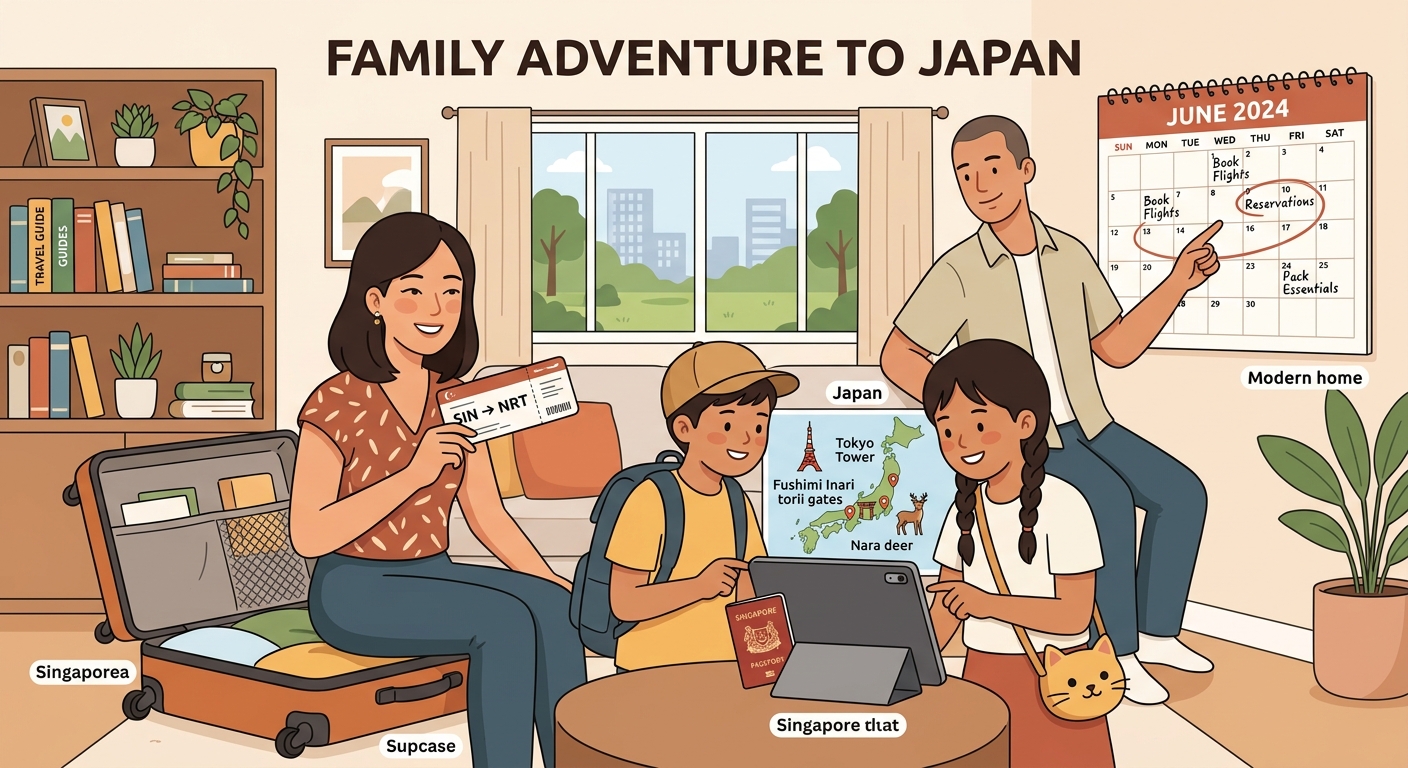
Tokyo offers everything, but it’s massive and can overwhelm first-timers with young kids. Stick to a few neighbourhoods instead of trying to conquer the whole city.
Osaka gives you a more relaxed vibe with incredible food. Kids love the Osaka Aquarium Kaiyukan, one of the world’s largest. The castle grounds provide open space for running around.
Kyoto brings culture without the frantic pace. Temples have gardens where children can feed koi fish and spot turtles. The Arashiyama Bamboo Grove feels like stepping into another world.
For a mix of everything, consider this route:
- Fly into Tokyo (3-4 days)
- Take the shinkansen to Kyoto (3 days)
- Day trip to Nara to feed the deer (1 day)
- End in Osaka (2-3 days)
This gives you cities, culture, nature, and food without excessive train changes that tire everyone out.
Booking Flights That Won’t Destroy Your Sanity
Direct flights from Singapore to Tokyo (Narita or Haneda) take about 7 hours. That’s manageable with proper preparation.
Night flights let babies and toddlers sleep through most of the journey. Morning flights work better for older kids who can watch movies and stay entertained.
Book seats strategically. Bassinet rows for infants under 2 years old. Aisle seats for toddlers who need bathroom trips every 45 minutes. Window seats for school-age kids who love watching clouds.
Pack a carry-on survival kit:
- Snacks (lots of them, different types)
- Wet wipes (double what you think you need)
- Change of clothes for each child
- iPad or tablet loaded with offline content
- Small new toys as surprise distractions
- Empty water bottles to fill after security
Request children’s meals when booking. They arrive first, giving you time to settle your kids before your own meal comes.
Finding Accommodation That Actually Works for Families
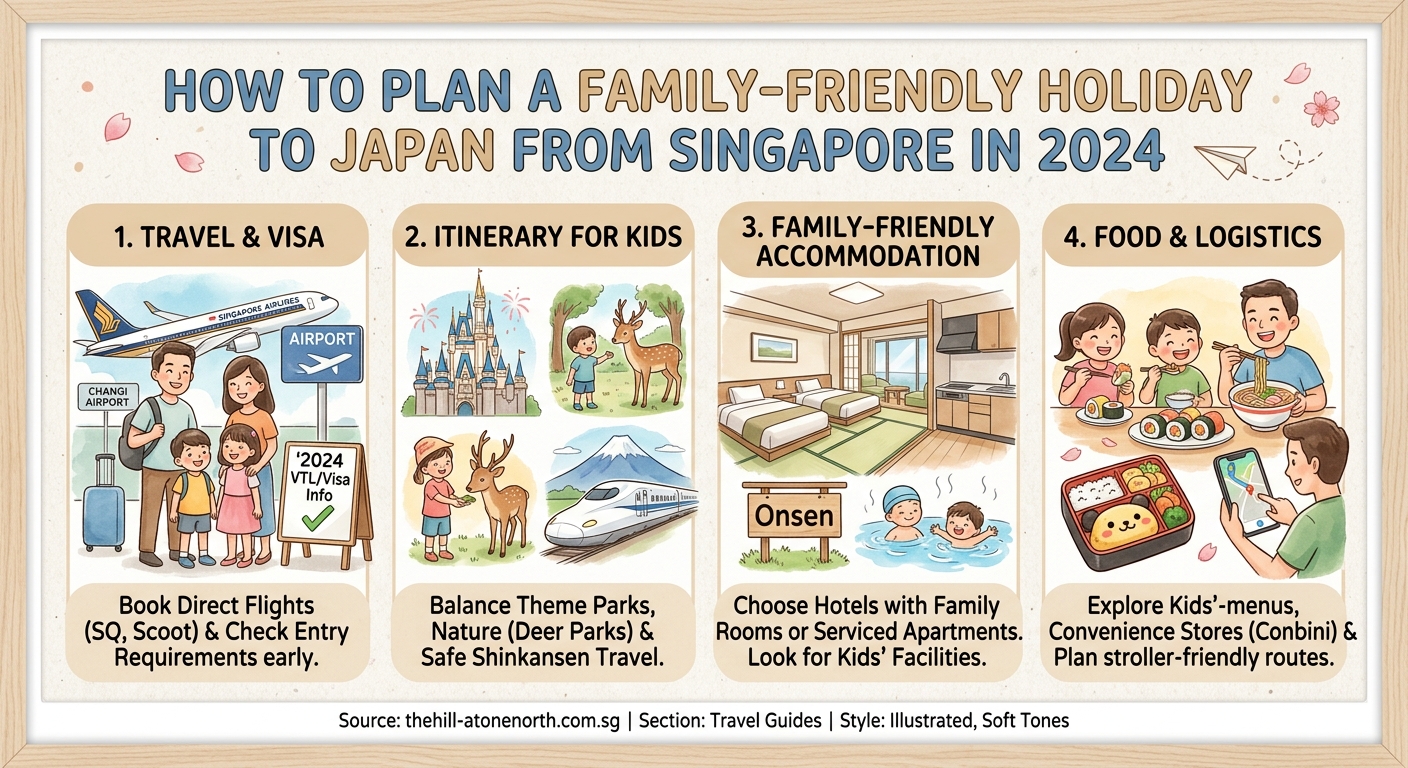
Hotels in Japan run smaller than Western standards. A “family room” might squeeze in one double bed and one single, with barely enough floor space for luggage.
Look for these features:
- Rooms with tatami areas where kids can play safely
- Properties near train stations with lift access (many stations have stairs only)
- Washing machines (some hotels offer laundry service or coin machines)
- Microwaves or kitchenettes for heating baby food
- Bathtubs (Japanese baths are deep and perfect for kids)
Aparthotels and serviced apartments give you more space and kitchen facilities. You can prepare simple meals, store snacks, and have actual living space beyond beds.
Book ground floor or low-floor rooms when possible. Less waiting for lifts, easier evacuation if needed, and you won’t worry about noise complaints from neighbours below.
“We stayed in a traditional ryokan with our 4-year-old and 18-month-old. The tatami room meant they could roll around safely, and the staff brought child-sized yukatas and futons. It became the highlight of our trip.” – Parent of two, travelled to Hakone
Getting Around Japan with Young Children
The Japan Rail Pass saves money if you’re taking multiple long-distance trains. Calculate your routes first. Sometimes individual tickets cost less.
Trains are incredibly punctual but can get packed during rush hours (7:30-9:30 AM and 5:30-7:30 PM). Avoid these times with kids and strollers.
Stroller strategy matters:
- Bring a lightweight umbrella stroller, not your bulky pram
- Many parents use baby carriers for trains and crowded areas
- Strollers fold and store in train vestibules or overhead racks
- Escalators are common, but not all stations have lifts
Taxis cost more but make sense for short trips with tired kids or lots of bags. Most don’t have car seats, so plan accordingly based on your comfort level.
Rent a car if you’re heading to rural areas or places like Hokkaido. International driving permits from Singapore work in Japan. Car rental companies provide child seats for a small fee.
Building a Realistic Daily Itinerary
Adults can power through 12-hour sightseeing days. Kids cannot. And they will make sure you know it through spectacular meltdowns.
Plan one major activity per day. That’s it.
Morning: Main attraction (temple, museum, park)
Lunch: Long, relaxed meal where kids can decompress
Afternoon: Secondary activity or free play time
Evening: Dinner and hotel
Build in buffer time. Toddlers walk slowly. Babies need feeding and changing. School-age kids want to stop at every vending machine and pet every cat.
Skip the 6 AM wake-up calls to “maximise your day.” Let kids sleep until they naturally wake. A well-rested child cooperates better than an exhausted one dragged to see the sunrise at a temple they won’t remember.
Kid-Friendly Activities That Actually Entertain
Parks and playgrounds appear everywhere in Japan. They’re clean, safe, and free. Let your kids burn energy while you sit on a bench with coffee.
teamLab Borderless in Tokyo mesmerizes children with digital art installations. They can touch, play, and interact with everything. Book tickets online beforehand as it sells out.
Tokyo Disneyland and DisneySea cater specifically to families. DisneySea skews slightly older with more thrilling rides. Both parks are immaculate and well-organised.
Nara Park lets kids feed wild deer with special crackers sold at stalls. The deer bow before taking food. Teach children to bow back and stay calm. Some deer get pushy, so supervise closely.
Cooking classes designed for families teach you to make sushi, ramen, or traditional sweets. Kids love hands-on activities, and you eat your creations afterward.
| Activity Type | Best Age Range | Cost Level | Booking Required |
|---|---|---|---|
| Public parks | All ages | Free | No |
| teamLab museums | 3+ years | Moderate | Yes |
| Theme parks | 4+ years | High | Recommended |
| Deer feeding | 3+ years | Low | No |
| Cooking classes | 6+ years | Moderate | Yes |
| Aquariums | All ages | Moderate | No |
| Indoor playgrounds | 1-8 years | Low | No |
Navigating Food with Picky Eaters
Japanese cuisine extends far beyond sushi and raw fish. You’ll find plenty of options for selective eaters.
Rice is everywhere. Plain white rice satisfies many children.
Ramen shops serve noodles in mild broth. Ask for “kodomo ramen” (children’s ramen) with less spice and smaller portions.
Convenience stores (Family Mart, 7-Eleven, Lawson) stock onigiri (rice balls), sandwiches, fruits, and snacks. They’re lifesavers for emergency meals.
Yoshinoya, Sukiya, and similar chains offer simple beef bowls and curry rice. Fast, cheap, and kid-approved.
Department store food halls (depachika) in basements have stunning prepared food selections. Buy bento boxes and have a picnic in a nearby park.
Baby food comes in pouches at most supermarkets and drugstores. Major brands like Wakodo and Pigeon offer various flavours and age ranges.
Formula and diapers are readily available but might be different brands than you use. Bring enough of your preferred products for the first few days, then buy local if needed.
Packing Smart for Different Seasons
Spring and autumn need layers. Mornings start cool, afternoons warm up, evenings cool down again. Pack:
- Light jackets or cardigans
- Long pants and shorts
- Comfortable walking shoes
- Sun hats and sunscreen
- Small backpack for each child to carry their own water and snacks
Summer requires:
- Breathable cotton clothes
- Extra shirts for sweat changes
- Portable fans (sold everywhere in Japan)
- Cooling towels
- Strong sunscreen
Winter demands:
- Warm coats and jackets
- Gloves, scarves, beanies
- Thermal underwear
- Waterproof boots if visiting snowy areas
- Hand warmers (buy them at convenience stores)
Always pack:
- Medications (fever reducers, allergy medicine, stomach remedies)
- First aid kit with plasters and antiseptic
- Insect repellent
- Reusable water bottles
- Portable changing mat
- Plastic bags for dirty clothes or nappies
Understanding Cultural Expectations
Japanese culture values quiet behaviour in public spaces. Trains, restaurants, and temples expect children to use indoor voices.
This doesn’t mean your kids need to be silent robots. Just aim for reasonable volume control.
Many restaurants provide high chairs and children’s cutlery. Some offer colouring sheets and crayons.
Shoes come off when entering homes, some restaurants, temples, and traditional accommodations. Slip-on shoes make this easier with kids.
Bathing culture differs from Western norms. Public baths and onsen require washing thoroughly before entering the communal bath. Some onsen don’t allow young children or have specific family bathing times.
Breastfeeding in public is less common in Japan than in Singapore. Nursing rooms (called “baby rooms”) appear in most shopping malls and major stations. They’re clean, private, and well-equipped.
Managing Common Challenges
Jet lag hits kids harder than adults. Arrive in the afternoon if possible, keep everyone awake until evening, then sleep through the night. Recovery takes 2-3 days.
Tired meltdowns happen. When they do, find a quiet spot, sit down, and wait it out. Japanese people are generally understanding of families with young children.
Lost children protocols: Take photos of your kids each morning in their outfits. If separated, you can show exactly what they’re wearing. Teach older children your phone number and hotel name.
Medical needs: Most hotels can direct you to English-speaking clinics. Travel insurance that covers medical emergencies is non-negotiable.
Language barriers shrink with translation apps. Google Translate’s camera function reads Japanese menus and signs instantly.
Budget Planning That Makes Sense
Japan isn’t as expensive as people think, but costs add up with a family.
Sample daily budget for a family of four (2 adults, 2 children):
- Accommodation: S$200-350
- Meals: S$80-120
- Transport: S$40-80
- Activities: S$50-100
- Miscellaneous: S$30-50
Total: S$400-700 per day
Save money by:
- Eating breakfast at convenience stores
- Having one meal at budget chains
- Using rail passes for long-distance travel
- Visiting free parks and shrines
- Shopping at 100-yen stores for snacks and small toys
Splurge on:
- One special meal at a nice restaurant
- Theme park visit
- Unique experience like a cooking class or cultural workshop
Making the Most of Your Trip
Keep expectations flexible. The best moments often happen when you abandon the plan and follow your children’s interests.
That random playground you stopped at might become more memorable than the famous temple you rushed through.
Take breaks. Rest days matter. Spend a morning at the hotel pool or find a park where kids can just play.
Photos are great, but don’t experience everything through a camera lens. Put the phone down sometimes and just be present.
Your Japan Adventure Starts with Good Planning
Japan family trip planning takes effort upfront but pays off in smooth sailing once you arrive. You don’t need a perfect itinerary. You need a realistic one that accounts for nap times, snack breaks, and the fact that your 3-year-old will want to press every button on every vending machine.
Start with your dates, pick 2-3 destinations maximum, book accommodation near train stations, and build in twice as much downtime as you think you need. The rest will fall into place. Your family will come home with full hearts, camera rolls bursting with photos, and stories you’ll retell for years.