The Hill at One North Resale vs New Units: Which Should You Buy?
Choosing between a resale unit and a new launch at The Hill at One North can feel like standing at a crossroads. Both paths lead to the same prestigious address in one of Singapore’s most dynamic districts, yet each offers distinct advantages that could shape your investment outcome for years to come.
Resale units at The Hill at One North offer immediate availability and established surroundings, while new units provide modern fittings and developer incentives. Resale prices typically reflect market conditions and unit condition, whereas new launches come with warranties and fresh layouts. Your choice depends on timeline urgency, budget flexibility, and whether you value move-in readiness over customisation potential and promotional packages.
Understanding Your Two Pathways at The Hill at One North
The Hill at One North stands as a landmark development in the Buona Vista area, where research institutions meet residential comfort.
When you consider buying here, you face two distinct options.
Resale units come from existing owners who purchased during the initial launch or from subsequent buyers. These homes have been lived in, carry their own stories, and reflect real-world usage patterns.
New units arrive fresh from the developer with untouched fixtures, the latest building systems, and that unmistakable smell of paint and possibility.
Each route serves different buyer profiles and circumstances.
Price Dynamics Between Resale and New Units
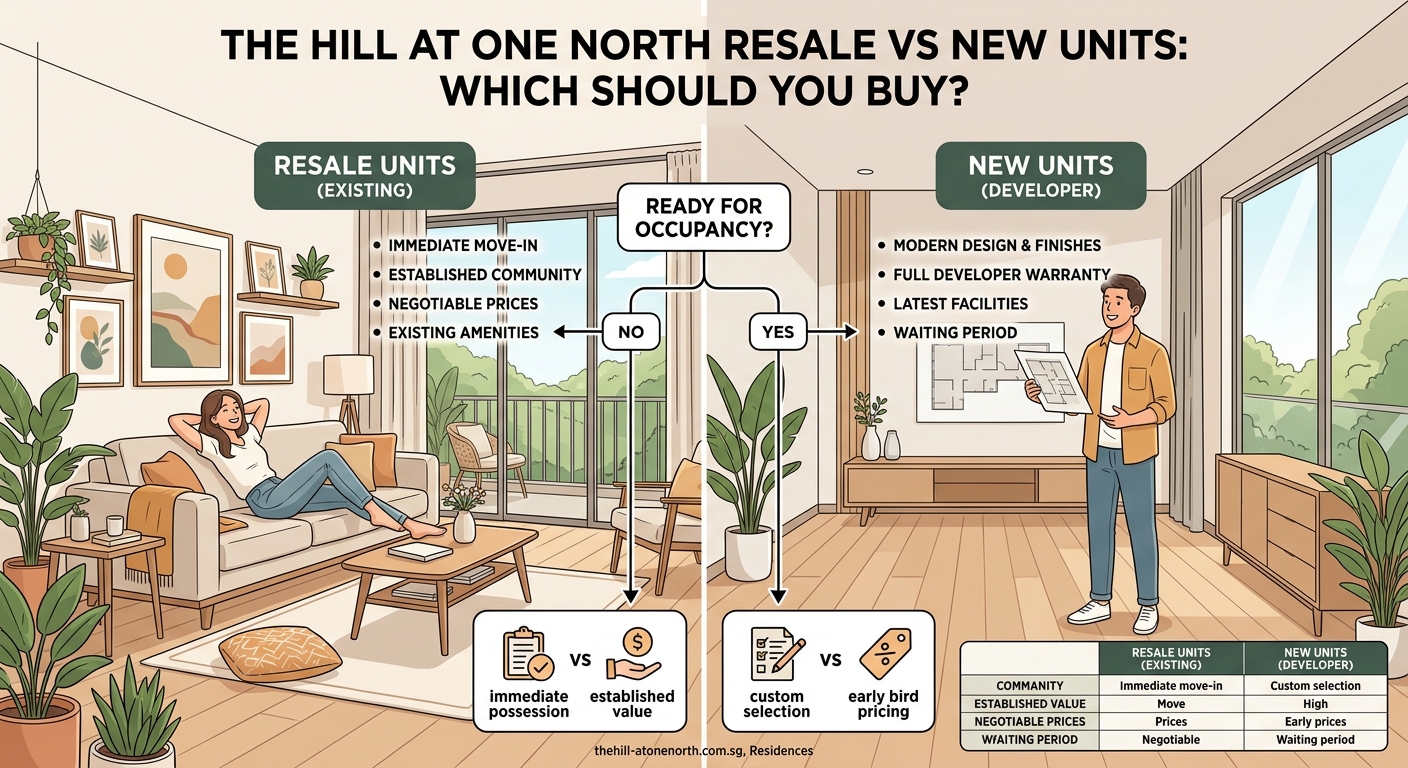
Pricing structures differ fundamentally between these two categories.
New launches typically command a premium because developers factor in marketing costs, showflat expenses, and profit margins. You also pay for that pristine condition and the psychological comfort of being the first occupant.
Resale units price themselves according to market sentiment, comparable transactions, and the specific condition of that particular home.
A well-maintained resale unit in a desirable stack might actually cost more than a new unit in a less favoured position. Location within the development matters enormously.
Factors Affecting Resale Pricing:
- Floor level and view quality
- Renovation condition and recency
- Facing direction and natural light
- Proximity to facilities or potential noise sources
- Historical transaction prices in the development
- Current market sentiment and interest rates
New unit pricing follows the developer’s price list, which typically increases as more units sell. Early bird buyers often secure better rates, though this comes with the trade-off of waiting for completion.
Timeline Considerations That Matter
Time plays a crucial role in this decision.
Resale units offer immediate or near-immediate occupation. You complete the purchase, collect the keys, and move in within weeks. This suits buyers who need accommodation urgently or investors seeking rental income without delay.
New launches require patience.
From option to completion, you might wait 36 to 48 months depending on construction progress. During this period, you cannot occupy the unit, though you can plan renovations and watch your investment take physical shape.
If you need a home within the next six months, resale becomes your practical choice regardless of other factors. Timeline constraints often override price considerations when accommodation needs are pressing.
This waiting period affects financial planning too. You might need to maintain your current rental or housing arrangement while servicing the new property loan.
Condition and Renovation Requirements
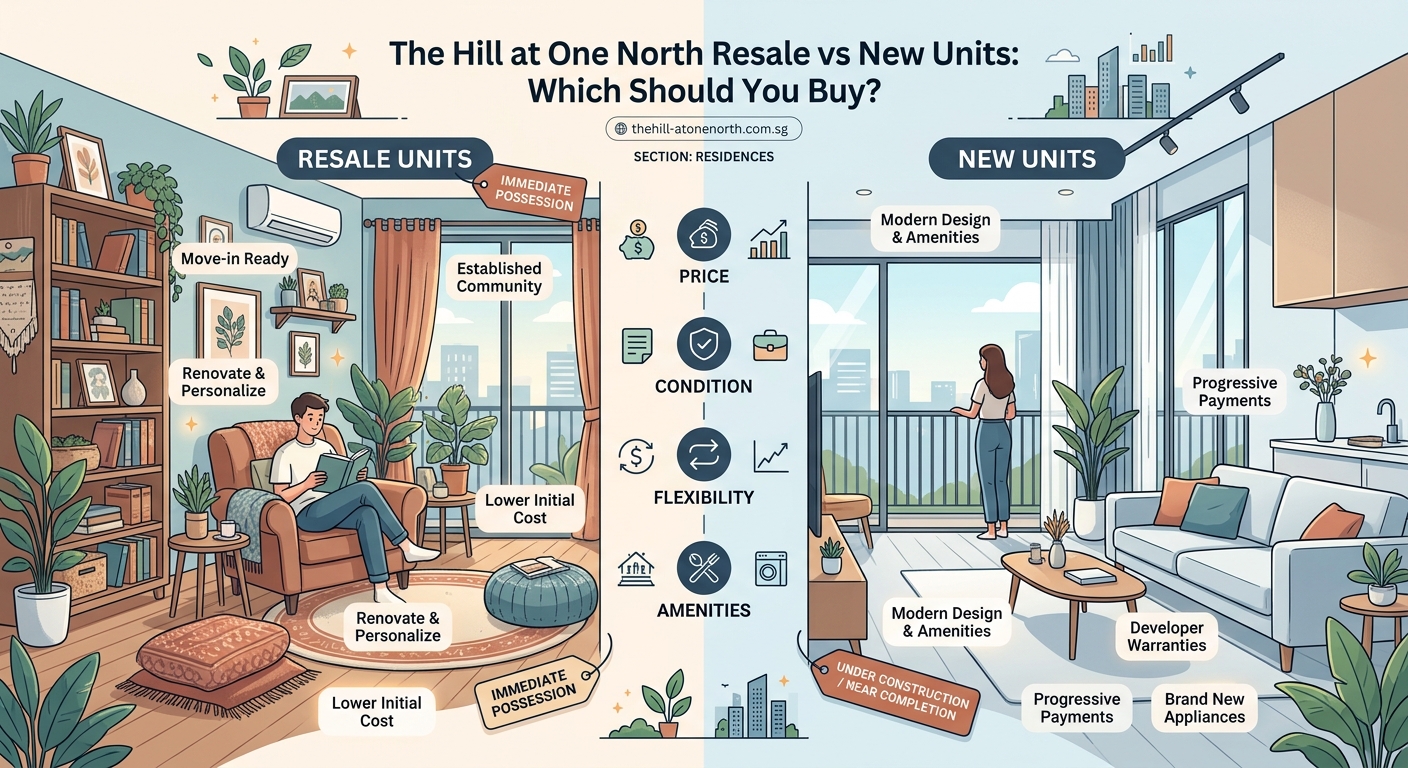
Walk into a new unit and everything gleams.
Appliances carry full warranties. Tiles sit perfectly aligned. Paint covers walls without a single scuff mark. You start with a blank canvas.
Resale units tell a different story.
Some previous owners maintained their homes immaculately, upgrading fixtures and repainting regularly. Others lived hard, leaving wear patterns that require attention before you can comfortably move in.
Typical Resale Renovation Needs:
- Repainting walls and ceilings to refresh appearance
- Replacing worn flooring or re-polishing existing surfaces
- Updating kitchen cabinets and countertops if dated
- Modernising bathroom fixtures and waterproofing
- Servicing or replacing air-conditioning units
- Addressing any water seepage or electrical issues
These costs add up, sometimes reaching $50,000 to $100,000 for comprehensive renovations. Factor this into your budget calculations when comparing total acquisition costs.
New units let you customise from the start, choosing your own colour schemes, flooring materials, and fixture styles without undoing someone else’s choices first.
Developer Incentives vs Market Negotiation
New launches come bundled with attractive packages during launch periods.
Developers offer absorption schemes, deferred payment plans, or even furniture vouchers to sweeten deals and move inventory. These incentives can reduce your effective purchase price or ease cash flow during the construction period.
Legal fees might be subsidised. Some developers throw in premium fittings or upgraded fixtures for early buyers.
Resale transactions work differently.
You negotiate directly with the seller, whose motivation varies wildly. A desperate seller facing financial pressure might accept below-market offers. A patient owner with no urgency holds firm on asking price.
Market conditions dictate your negotiating power. During cooling periods, resale sellers often show more flexibility than developers who maintain price discipline to protect overall project valuations.
Loan Considerations and Financial Structuring
Banks view new and resale properties through slightly different lenses.
New launches receive valuation based on purchase price or market valuation, whichever is lower. Since developers price competitively during launches, these often align closely.
Resale valuations depend entirely on bank assessors who compare recent transactions. If you overpay relative to comparable sales, the bank might value the property lower than your purchase price, requiring you to cover the difference in cash.
| Aspect | New Units | Resale Units |
|---|---|---|
| Valuation Basis | Purchase price or valuation | Recent comparable transactions |
| Down Payment Timing | Progressive during construction | Lump sum at completion |
| Loan Disbursement | Progressive payments | Full amount at completion |
| Interest During Construction | On disbursed amounts only | Not applicable |
| Cash Over Valuation Risk | Lower | Higher if overpriced |
Progressive payment schemes for new launches mean you pay down payment and subsequent instalments as construction progresses. Your loan interest only accrues on disbursed amounts, not the full loan quantum.
Resale purchases require the full down payment and loan disbursement at completion, which demands greater liquidity upfront.
Rental Yield and Investment Perspectives
Investors weigh these options through the rental income lens.
Resale units generate income immediately after purchase. You can start recouping costs within weeks, making them attractive for cash flow-focused investors.
New units sit idle during construction, generating zero income while you service loan interest. However, they often command higher rents once completed due to their pristine condition and modern fittings.
Tenants generally prefer newer units with warranties and lower maintenance risks. This preference can translate to shorter vacancy periods and stronger rental demand.
Capital appreciation potential depends more on location and market timing than whether you bought new or resale. Both benefit equally from area development and infrastructure improvements.
Warranty Protection and Defect Coverage
New units come with a defect liability period, typically 12 months from handover.
During this window, the developer must rectify structural issues, workmanship defects, and material failures at no cost to you. This safety net provides peace of mind during your first year of ownership.
Resale units carry no such protection.
What you see is what you get. Hidden defects become your responsibility to discover and fix. Pre-purchase inspections help but cannot guarantee the absence of latent issues that might surface months after moving in.
Appliances in resale units might be out of warranty or nearing the end of their service life. Budget for potential replacements within your first few years of ownership.
Community and Facilities Maturity
Resale purchases place you in an established community.
Residents have formed their routines. Management committees have ironed out operational issues. The swimming pool has been tested through multiple seasons. You know exactly what you’re getting in terms of facility quality and community dynamics.
New launches start from zero.
Early residents become pioneers, shaping the community culture as more owners move in. Facilities need time to season. Management processes require refinement. Landscaping needs years to mature into the lush greenery shown in marketing renders.
Some buyers relish this pioneer experience. Others prefer joining a settled community where everything already functions smoothly.
Making Your Decision Framework
Your personal circumstances should drive this choice more than abstract comparisons.
Choose Resale If You:
- Need immediate accommodation or rental income
- Prefer knowing exactly what you’re buying
- Want to negotiate directly with motivated sellers
- Have renovation skills or contacts for cost-effective upgrades
- Value established facilities and mature landscaping
Choose New If You:
- Can wait 3 to 4 years for completion
- Want pristine condition and full warranties
- Prefer customising finishes to your taste
- Value developer incentives and payment schemes
- Seek the psychological comfort of first occupancy
Neither option is objectively superior. Each serves different needs and preferences.
Your Path Forward at The Hill at One North
The choice between resale and new units at The Hill at One North ultimately reflects your personal timeline, financial structure, and lifestyle preferences.
Resale units reward those who value immediacy and established environments. New launches suit buyers who can exercise patience in exchange for modern finishes and developer support. Both paths lead to the same prestigious address with access to one-north’s vibrant ecosystem of research institutions, dining options, and transport connections.
Visit both resale units and the showflat if still available. Walk through actual homes, not just marketing materials. Talk to current residents about their experiences. Check recent transaction prices through property portals. Only then can you make an informed decision that aligns with your specific situation and goals.