Your First Month Living at One North: Essential Tips for New Residents
Moving into a new home at One North is exciting, but those first few weeks can feel overwhelming. Between unpacking boxes, setting up utilities, and figuring out where to buy groceries, there’s a lot to manage. This guide walks you through everything you need to know to settle in smoothly and start enjoying your new neighbourhood from day one.
Your first month at One North sets the foundation for comfortable living. Focus on understanding building amenities, mapping out transport options, locating essential services, and connecting with the community. Master the MRT routes, register for facility access, and familiarize yourself with nearby hawker centres and supermarkets. Taking time to explore systematically helps you feel at home faster and avoid common new resident frustrations.
Getting Your Unit Ready
Before you even think about decorating, handle the practical setup tasks that make daily life function smoothly.
Start with your internet connection. Most providers need at least a week to install, sometimes longer during peak periods. Book your installation appointment before your move-in date if possible. You’ll need internet access for everything from work calls to scanning QR codes at restaurants.
Check your air conditioning units within the first 48 hours. Run each one for 30 minutes and listen for unusual sounds. Look for water leaks around the indoor units. Report any issues to your landlord or property management immediately, while everything is still documented as pre-existing.
Test all electrical outlets with a phone charger or lamp. Check water pressure in every tap, including the kitchen and both bathroom sinks. Flush toilets to ensure proper drainage. These small checks prevent bigger headaches later.
“Most maintenance issues are easiest to resolve in your first week, before you’ve fully moved in. Document everything with photos and timestamps.” — Property Management Best Practice
Set up your utilities account if it’s not included in your rental. You’ll need your tenancy agreement and identification. Most buildings at One North have centralized systems, but confirm the process with your landlord.
Understanding Your Building Amenities
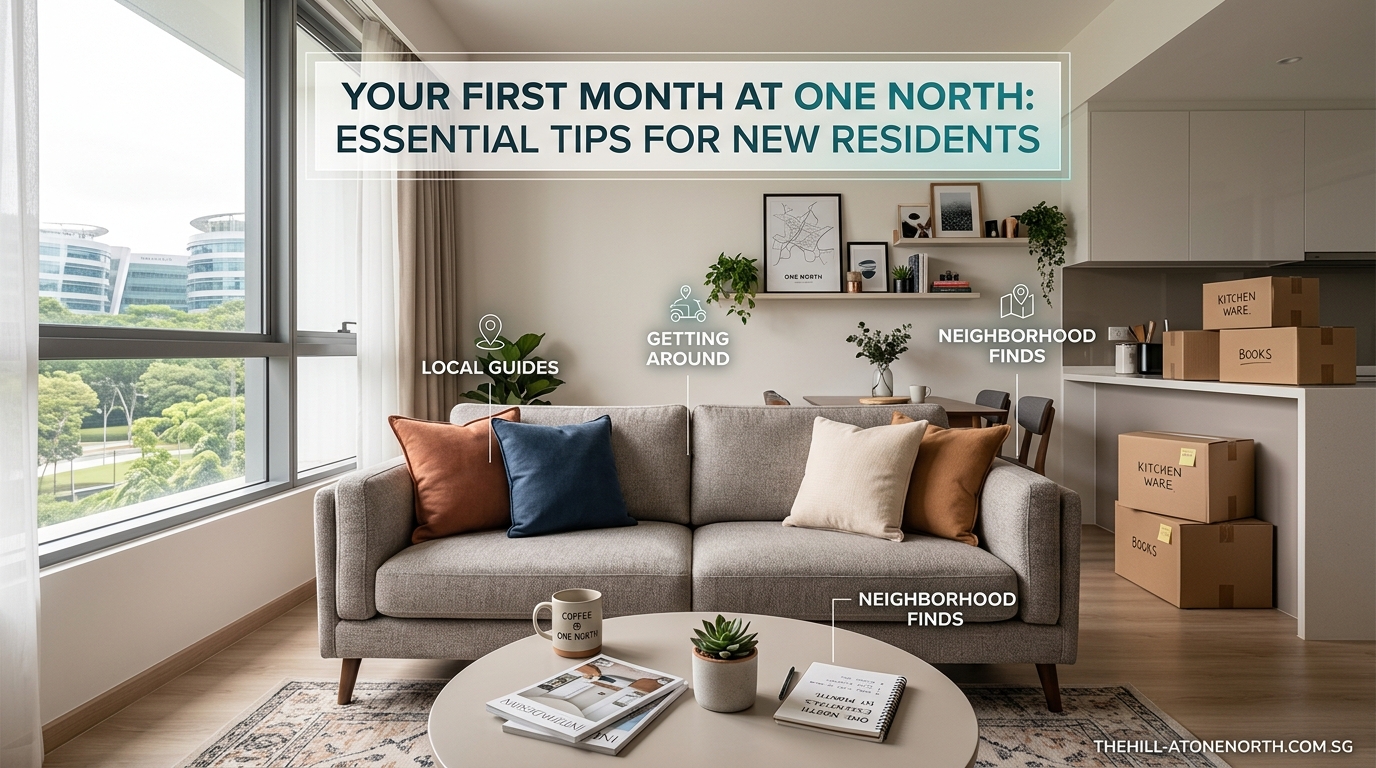
One North residences typically offer facilities that enhance daily living, but you need to know how to access them.
Visit the management office during your first week. Collect your access cards, parking passes, and any facility registration forms. Ask about:
- Pool and gym operating hours
- Booking procedures for function rooms or BBQ pits
- Visitor parking arrangements
- Rubbish disposal schedules and recycling guidelines
- Maintenance request procedures
Download your building’s resident app if one exists. Many newer developments use apps for facility bookings, announcements, and maintenance requests. Set up your account early to avoid scrambling when you actually need to book something.
Walk through the common areas. Locate the mailroom, bin centres, and emergency exits. Know where the fire extinguishers and emergency assembly points are located. This knowledge matters during actual emergencies.
Mastering Transport Connections
One North’s biggest advantage is connectivity, but you need to understand the system to use it effectively.
The One North MRT station on the Circle Line puts you 15 minutes from Orchard and 20 minutes from Marina Bay. During your first week, do a test run of your daily commute at the actual time you’ll be travelling. Morning peak hours (7:30 to 9:00) and evening rush (6:00 to 7:30) are significantly more crowded than midday trips.
| Transport Mode | Best For | Timing Tips |
|---|---|---|
| MRT Circle Line | CBD commutes, shopping districts | Avoid 8:00 to 8:30 peak crowding |
| Bus 74, 91, 92 | Nearby estates, alternative routes | Check SG BusLH app for real-time arrivals |
| Cycling | Fusionopolis, Biopolis, Mediapolis | Covered paths available, bring lock |
| Walking | Rochester Mall, Star Vista | 10-15 minute radius very walkable |
Set up your SimplyGo account or get an EZ-Link card immediately. Standing at the fare gate fumbling with cash wastes time and annoys other commuters.
For cycling, One North has excellent paths connecting the business parks. If you bike, register your bicycle with the building management and invest in a quality lock. Bicycle theft does happen.
Locating Essential Services
Knowing where to get daily necessities prevents those frantic 9pm searches for toilet paper.
Grocery Shopping
Your closest options include:
- FairPrice at Rochester Mall (8-minute walk)
- Cold Storage at Star Vista (12-minute walk)
- Sheng Siong at Ghim Moh Market (10-minute bus ride)
Each has different strengths. FairPrice offers convenience and reasonable prices. Cold Storage stocks more imported items and organic options. Sheng Siong typically has the lowest prices on fresh produce and Asian ingredients.
For late-night emergencies, the 7-Eleven at One North station operates 24 hours. Prices are higher, but it saves you when you run out of essentials.
Healthcare
Register with a GP clinic before you get sick. Waiting until you have a fever means longer wait times and unfamiliar doctors. Popular options near One North include clinics at Rochester Mall and Star Vista. Call ahead to check panel arrangements if you have corporate insurance.
The nearest 24-hour clinic is at Queenstown, about 10 minutes by taxi. For emergencies, National University Hospital is the closest A&E, roughly 15 minutes away.
Banking and Post
Most major banks have ATMs at One North station. For branch services, head to Rochester Mall or Star Vista. The nearest post office is at Ghim Moh, useful for registered mail and parcel collection.
Finding Good Food
One North sits between several excellent food centres, each with different specialties.
Ghim Moh Market and Food Centre offers authentic hawker fare at local prices. The chicken rice, laksa, and carrot cake stalls have loyal followings. Go before 12:30 to avoid the lunch crowd. Many stalls close by 3pm, so don’t expect dinner options.
Rochester Mall has a food court plus restaurants like Din Tai Fung and Ajisen Ramen. Prices are higher but quality is consistent. Good for when you want air conditioning and don’t mind paying for it.
Star Vista provides more variety, from Korean BBQ to Japanese curry. The basement supermarket food court serves budget meals. Upper floors have sit-down restaurants for when you’re entertaining guests.
Fusionopolis and Biopolis have multiple cafes and eateries inside the buildings. If you work from home, these make nice change-of-scenery lunch spots. Prices reflect the office crowd they serve.
For late-night food, your options narrow considerably. The McDonald’s at Star Vista operates until midnight on weekdays, later on weekends. Otherwise, you’re looking at food delivery apps or the 24-hour prata place near Queensway.
Building Your Routine
The first month is about establishing patterns that work for your lifestyle.
Map out your morning routine with actual timing. How long does it take to get from your bed to the MRT platform? Where will you grab coffee? Which route has fewer crowds? Test different variations during your first two weeks.
Identify your regular service providers:
- Preferred laundry service (if your unit lacks a washer)
- Reliable food delivery options
- Nearby pharmacy for regular medications
- Preferred taxi or ride-hailing pickup points
Set up recurring deliveries for items you use consistently. Toilet paper, coffee, cleaning supplies. Most supermarkets offer online ordering with regular delivery slots. This saves time and mental energy.
Connecting With Your Community
One North attracts young professionals, families, and students. Your building likely has a mix of all three.
Join your building’s resident chat groups if they exist. These groups share useful information about everything from lost cats to recommended handymen. They also alert you to building issues like water shutoffs or lift maintenance.
Introduce yourself to your immediate neighbours. A simple “Hi, I just moved into unit XX” goes a long way. These are the people who’ll receive your packages when you’re out or alert you if your door is ajar.
Check community boards for events. Many condos organize social activities, from movie nights to fitness classes. Attending even one or two helps you meet people and feel more connected.
Handling Common First Month Challenges
Every new resident faces similar issues. Here’s how to solve them efficiently.
Package Delivery Confusion: Ensure your address includes your building name, tower (if applicable), and unit number. Add your mobile number so delivery drivers can call. Check with management about parcel locker systems.
Noise Adjustments: Buildings have different acoustics. If noise bothers you, identify the source and timing. Construction noise has legal hour limits. Neighbour noise may require a polite conversation. Give yourself two weeks to adjust before taking action.
Climate Control: Singapore’s humidity takes adjustment. Run your air conditioning regularly to prevent mold, even if you’re comfortable with fans. Check that all windows seal properly during heavy rain.
Visitor Management: Learn your building’s visitor registration process before your first guest arrives. Some require advance registration, others use QR codes. Know the visitor parking situation to save your guests frustration.
Setting Up for Long-Term Comfort
Use your first month to invest in items that improve daily quality of life.
A good drying rack matters in Singapore’s humidity. Your laundry needs air circulation to dry properly and avoid musty smells. Position it near a window or in a well-ventilated area.
Blackout curtains help if you’re sensitive to light. The morning sun hits different units at different times. If it wakes you too early, curtains are cheaper than chronic sleep deprivation.
Consider a dehumidifier if your unit feels damp. Ground floor units and those facing certain directions tend to trap moisture. This protects your belongings and makes the space more comfortable.
Stock a basic toolkit: screwdriver set, hammer, measuring tape, picture hooks. You’ll need these for hanging artwork, assembling furniture, and minor fixes. Buying them during a non-emergency saves money.
Making One North Feel Like Home
Your first 30 days establish whether One North feels like a temporary stop or a real home.
Take time to walk the neighbourhood without a specific destination. Notice the small details: the best spot to watch sunsets, which shops have friendly staff, where the neighbourhood cats hang out. These observations build familiarity and comfort.
Establish a favourite regular spot. Maybe it’s a coffee shop where you read Saturday mornings, or a bench where you take evening calls. Having “your place” in the neighbourhood creates a sense of belonging.
Personalize your space gradually. Don’t rush to fill every corner. Live in the unit for a few weeks to understand how you actually use the space, then furnish accordingly. This prevents buyer’s remorse on furniture that doesn’t fit your lifestyle.
Document your first month with photos. You’ll forget how different everything looked when you first arrived. These images become meaningful as you settle in and make the space yours.
Starting Your One North Chapter Right
Your first month sets the tone for your entire time at One North. Focus on the practical foundations: transport routes, food sources, building systems, and essential services. Master these basics and you’ll have mental space to enjoy everything else the neighbourhood offers.
Take it one week at a time. Week one handles utilities and access. Week two maps transport and food. Week three builds routines. Week four refines and adjusts. Before you know it, you’ll be the one giving advice to the next new resident moving in down the hall.