5 Smart Home Upgrades That Add Value to Your Hill at One North Unit
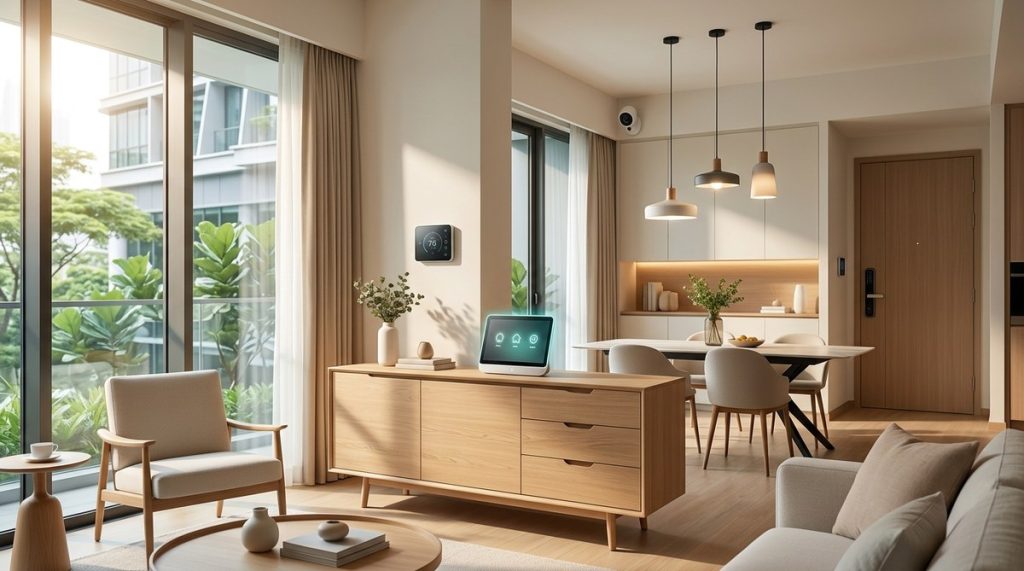
Your unit at The Hill at One North already sits in one of Singapore’s most dynamic neighbourhoods. You are surrounded by biotech hubs, the Fusionopolis energy, and the green corridors of one-north park. But here is the real question: does your unit’s technology match the neighbourhood’s forward-looking vibe? In 2026, buyers in this area expect more than just a nice kitchen and good views. They want a home that works as smartly as they do. The right upgrades do not just make life more comfortable. They can also push your resale price higher. Let us look at the changes that actually pay off.
Smart home upgrades add value to condo units when they match what buyers in the area actually want. Focus on integrated climate control, energy monitoring, and keyless entry. Avoid niche gadgets that date quickly. The best investments are invisible when not in use but indispensable daily. For The Hill at One North, prioritise upgrades that work with the existing smart wiring and unit layouts.
Why Smart Home Upgrades Add Value to Condo Units in 2026
The property market in Singapore has shifted. Buyers today, especially in the one-north corridor, are often tech professionals or investors who understand the value of a connected home. They are not looking for gimmicks. They want systems that save time, reduce utility bills, and offer peace of mind. When you invest in upgrades that are permanent and integrated, you are not just improving your own living experience. You are creating a selling point that stands out on any listing.
A recent study by the Singapore Real Estate Association noted that units with documented smart home features spent 15 percent less time on the market compared to standard units. That matters when you are planning your next move.
The 5 Upgrades That Deliver the Best Return
Let us break down the specific upgrades that work for a unit at The Hill at One North. These are ranked by practicality, cost, and impact on resale value.
1. Smart Air Conditioning Control
Singapore’s heat is relentless. Air conditioning is not a luxury. It is a necessity. But running the unit all day while you are at work is wasteful. A smart AC controller lets you manage the temperature from your phone. You can cool the bedroom 15 minutes before you reach home from one-north MRT. You can set schedules so the unit runs only when someone is inside.
- Cost: $150 to $400 per unit, plus installation.
- Resale impact: High. Buyers see lower electricity bills and convenience.
- Best for: The open-plan living areas in The Hill’s larger units.
2. Integrated Smart Lighting
Motion-sensor lights in hallways and dimmable smart bulbs in the living room create a modern feel. More importantly, they save energy. Buyers in 2026 are conscious of their carbon footprint. A system that lets you control lights via voice or app is a strong selling point.
- Cost: $200 to $600 for a three-room setup.
- Resale impact: Medium to high, especially if integrated with a voice assistant.
- Tip: Stick to a standard protocol like Zigbee or Matter so the system is not locked to one brand.
3. Video Doorbell and Smart Lock
Security is a top concern for condo dwellers, even in a well-managed development like The Hill at One North. A video doorbell lets you see who is at the door without opening it. A smart lock means you never have to worry about lost keys. You can grant access to a cleaner or a guest remotely.
- Cost: $300 to $800 for a good set.
- Resale impact: High. This is one of the most requested features by buyers.
- Note: Check with the management office first. Some condos have restrictions on altering the main door.
4. Energy Monitoring System
This is the upgrade that pays for itself. A whole-home energy monitor tracks which appliances use the most power. You can see the data on your phone. Over time, you adjust your habits and save money. For a buyer, seeing a dashboard of historical energy use is a sign that the unit is well maintained.
- Cost: $100 to $300 for a basic system.
- Resale impact: Medium. It appeals to environmentally conscious buyers.
- Best for: Units with high electricity bills, common in larger layouts.
5. Smart Blinds and Curtains
Motorised blinds that open and close based on the time of day or temperature are a luxury touch. They keep the unit cooler during the afternoon sun and reduce glare on your TV. In a unit with floor-to-ceiling windows, which many at The Hill at One North have, this upgrade is both practical and impressive.
- Cost: $200 to $500 per window.
- Resale impact: Medium to high, depending on the number of windows.
- Important: Measure carefully. Custom sizes cost more.
Common Mistakes That Reduce Value
Not every smart upgrade is a good idea. Some can actually hurt your resale prospects. Here is a table to help you separate the winners from the waste.
| Upgrade | Why It Can Backfire | Better Alternative |
|---|---|---|
| Smart refrigerator | Appliances date quickly. A fridge from 2024 looks old by 2026. | Focus on built-in systems that stay with the unit. |
| Voice-only controls | Buyers may use different assistants (Google, Alexa, Apple). | Use a hub that supports multiple platforms. |
| Cheap smart plugs | They fail often and look messy. | Invest in hardwired switches instead. |
| Overly complex automation | New owners may not want to learn a complicated system. | Keep it simple. On/off and scheduling is enough. |
| Proprietary ecosystem | If the company goes under, the system becomes useless. | Choose open standards like Matter or Zigbee. |
Expert advice: “The best smart home upgrade is one that the next owner can use without reading a manual. If they need a tutorial, you have over-engineered it.” Jason Lim, property consultant at ERA Singapore.
How to Plan Your Upgrade Project
Follow these steps to avoid common pitfalls and stay on budget.
- Audit your current setup. Walk through your unit and note which areas are already wired for smart devices. The Hill at One North units often have pre-installed data points in the living room and study.
- Set a budget. A reasonable starting point is $1,500 to $3,000 for a 2-bedroom unit. This covers the five upgrades listed above.
- Check condo rules. Some management corporations require approval for any electrical work. Submit your plan to the MCST before buying anything.
- Hire a licensed electrician. In Singapore, any work on the main power supply must be done by a licensed professional. Do not DIY this part.
- Test everything. After installation, spend a week using the system as a buyer would. Fix any glitches before listing your unit.
Matching Upgrades to Your Unit Layout
The Hill at One North offers several unit types. Each benefits from a slightly different approach.
- One-bedroom or studio units: Focus on space-saving upgrades. A smart lock and a multi-sensor that controls both light and AC are ideal. You do not need complex automation.
- Two-bedroom units: Add smart blinds in the living room and a video doorbell. These are the features that families notice.
- Three-bedroom or larger units: Go for a full energy monitoring system and zoned AC control. Larger units have higher bills, so savings are more visible.
If you are unsure which layout you have, check our guide on The Hill at One North floor plans: which unit layout suits your lifestyle.
What Buyers in One North Actually Look For
The one-north area attracts a specific type of buyer. They are often researchers, engineers, or startup founders. They value efficiency. They do not want to spend weekends fixing things. When they view a unit, they notice details like:
- Whether the Wi-Fi coverage is strong (mesh systems are a plus).
- If the electrical panel is labelled and tidy.
- Whether the smart devices use standard apps or obscure brands.
- How easy it is to control the air conditioning from the bedroom.
These small signals add up. A unit that feels “smart” without being complicated will command a higher price.
How Smart Home Upgrades Add Value to Condo Resale in 2026
Let us be direct. The resale market in Singapore has softened slightly compared to the peak of 2023. But well-maintained units in prime locations like one-north still attract serious offers. The difference between a unit that sells in two weeks and one that sits for three months often comes down to the details. Smart home upgrades are one of those details.
When you list your unit, include a one-page summary of the smart features. List the brands, the warranty status, and the energy savings. This gives buyers confidence. They know they are not inheriting a headache.
For more context on the area’s investment potential, read is The Hill at One North a good investment in 2026.
Making Your Unit Stand Out Without Overcapitalising
You do not need to turn your unit into a tech showroom. A few well-chosen upgrades are enough. The goal is to make the unit feel modern, efficient, and secure. Avoid adding things that are too personal, like a custom voice assistant that only responds to your name. Buyers want a blank canvas with smart bones.
Here is a quick checklist of what to avoid:
- Smart mirrors with built-in displays (they date fast and are expensive to replace).
- Automated pet feeders (the next owner may not have a pet).
- Customised dashboards that require a login to operate (keep it app-based and simple).
The Right Time to Upgrade
If you are planning to sell within the next 12 months, start your upgrades now. Buyers in 2026 are already looking at units. A fresh set of smart upgrades can be the deciding factor between two similar units on the same floor.
If you are planning to stay for a few more years, the upgrades still make sense. You enjoy lower bills and more comfort. And when you do sell, the features will be mature and well tested. That is a win-win.
For more ideas on improving your unit, see how to customise your unit at The Hill at One North for maximum resale value in 2026.
A Simple Path to a Smarter Home
Start small. Pick one upgrade, install it properly, and live with it for a month. Then add the next. This approach prevents buyer’s remorse and ensures each addition is genuinely useful. By the time you are ready to sell, your unit will feel like a home that works for the way people actually live in 2026. That is the kind of home that sells itself.